PRODUCT 01 · SOY WAX
Bulk Soy Wax at 58° for Candle Making
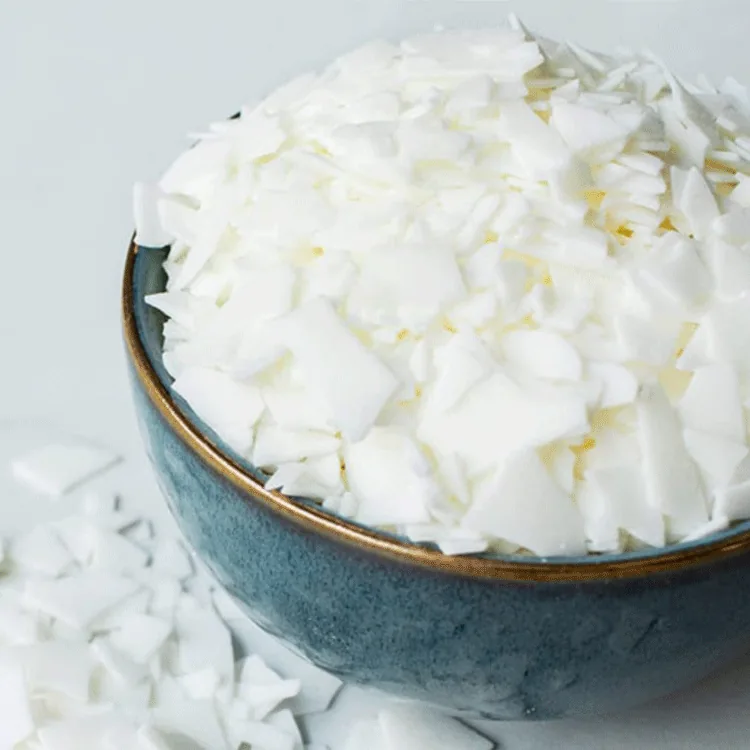
Soy wax at 58° is a 100% pure soy base in fine granules. The granules pack dense and pour clean, which makes it a dependable workhorse for both container candles and moulded pillars.
- Form
- Fine granules
- Melt point
- 58°C (136°F)
- Base
- 100% soy
- Samples
- Free, with COA
POSISION supplies bulk soy wax to candle brands, importers, and studios from our own factory in Henan, China — in business since 2002 with in-house R&D and quality control on site. The workhorse of the range is 58 degree soy wax for candles: a 100% soy base with no paraffin blended in, sold as fine granules that pack tight, pour clean, and set flat in containers. Use this page as your buying checklist — melt point, fill behavior, fragrance load, MOQ, samples — then measure our terms against your current soy wax supplier.
Why does a 100% soy base matter on your label?
When your packaging says "soy," every kilogram in the jar should be soy. This wax is made from a 100% soy base with no paraffin blended in, so the claim you print is the wax you pour. For importers, one base material also means a simpler material story and fewer questions at retail.
For a studio, the same discipline saves money. Wax is the lowest-cost input in a candle — the surface, the color, and the label are what buyers judge. A predictable base lets you spend your budget on fragrance and packaging instead of re-pouring failed batches. You also get a supplier who answers for the base itself: POSISION has run its own factory in Henan since 2002, so the soy wax is made, tested, and shipped under one roof. Ask about the granule, the melt point, or the fill behavior and you are talking to the people who produce it. If you are building a full range of plant-based formats, our wholesale candle supplies page lists the other bases produced under the same factory QC program.
What is 58 °C soy wax for candles?
This grade melts at 58 °C (136 °F), a mid-range point sized for container candles and workable in pillar and molded shapes. It arrives as fine granules, not slabs or large chips, because particle size changes how the wax behaves in your kettle and in the mold.
The 58 °C point sits between the soft, low-melt container waxes and the hard waxes used for free-standing shapes. That position is deliberate: it pours easily, yet sets with enough body for a candle that holds its profile at room temperature. Read the melt point as a working number, not a label: it tells you how hot the kettle must get before the wax is fully fluid, and how quickly the pour will start to set. If your line needs a softer body or a slower set, we also offer a flaked soy wax at 52 °C — request both spec sheets in a single RFQ and compare them against your jars.
Why does the granule form decide your surface finish?
Fine granules pack densely in the kettle. Dense packing means less air trapped in the melt and fewer voids that later open up as sinkholes on the candle surface. In production terms: clean pouring, flat tops, and fewer re-pours per shift.
That surface behavior is why this product works as a container candle wax. Cup-style containers — wide mouth, narrow foot — fill flat, and the fill stays easy even in summer, when softer waxes turn sluggish and leave uneven tops. For brands running multiple fill lines, consistent flat fills cut finishing labor on every batch. You can verify this in one afternoon: pour the free sample into your own jar, let it set overnight, and check the top with a straightedge.
Can you use this soy wax for pillar and molded candles?
Yes — with one adjustment. A 58 °C fine-granule soy wax works for pillars and molded candles, but pure soy can grip mold walls on release. Standard industry practice is to add up to 30% soft soy wax, or a beeswax/paraffin blend that you source from your own suppliers, to ease demolding. We do not sell paraffin — the blend and the ratio stay under your control.
Test the blend on your actual molds before committing a production run. That is what the pre-production sample stage is for: you approve the poured piece, not just the raw granules, before we fill a container. Molds with undercuts or deep detail deserve an extra test pour; smooth, tapered molds usually release without any addition. Once a blend works, write it into your production spec — the exact ratio, pour temperature, and mold prep — so the next run matches the piece you approved, not a memory of it.
How much fragrance oil should I add to soy wax?
Fragrance load in soy wax is the question we answer most often, so the answer starts on our spec sheet. The baseline ratio: per 500 g of this wax, use about 10 g of dye and 10 ml of fragrance oil. Scale it directly — a 5 kg test batch takes about 100 ml of fragrance oil and 100 g of dye.
Treat those numbers as the starting point, not a ceiling, and record results for each oil you buy. Different scent families and different suppliers' oils behave differently at the same load, so test before production. When you change anything — oil supplier, dye brand, container — change one variable at a time and keep the 500 g baseline fixed; the result then tells you exactly which variable moved. The spec-sheet ratio keeps your first pours repeatable, and your notes make the next ones predictable. For the full walkthrough of pouring temperatures and test pours, read our 58° soy wax guide.
What QC and paperwork come with each batch?
Every batch is checked by our internal QC before it leaves the factory, and each batch ships with its COA — certificate of analysis. That document is your first gate: check melt point and appearance against the sample you approved, batch after batch, not just on the first order.
POSISION has run this way since 2002: our own factory in Henan, our own R&D and QC teams, and no third party between the kettle and your port. That routine applies to every order we export — and we ship to buyers worldwide. The operating values are short — integrity, responsibility, harmony. In practice that means the spec we sample is the spec we ship, and if something drifts, you hear it from us first, with data.
What are the MOQ and sample terms?
MOQ is flexible and friendly. We size the first order around your pilot run rather than forcing you to commit to full container volume on day one. Free samples ship with the COA for that batch, so you validate the actual production wax — not a lab special made only for sampling.
Orders that carry your label or a custom specification move through a pre-production sample before the bulk run. You approve that poured piece, we lock the parameters, and production repeats them. Every batch after that is QC-checked and ships with its own COA.
First-order flow, step by step
- Send the RFQ with grade, container or mold type, and volume.
- Receive a reply within 24 hours — price, lead time, and sample terms.
- Get the free sample with its batch COA and run your test pour.
- Approve the pre-production sample for OEM or labeled orders.
- Confirm the order; the factory pours, QC-checks, and ships with the batch COA.
To start: send the RFQ with the wax grade, the container or mold you fill, and your target volume. You get a reply within 24 hours by WhatsApp or phone at +86 133 8403 0866, or by email to kris@posision.com. If you are still comparing suppliers, Send an RFQ with your jar type and monthly volume and let us quote against your current numbers.
The math is simple: 58 °C melt point, fine granules, a spec-sheet fragrance baseline, batch COA on every shipment, and a 24-hour answer on price. Check those against your current supplier, then Request a quote and ask for the free sample with COA.
FAQ
Soy Wax: buyer questions
Is your soy wax 100% pure soy?
Yes. The 58° granular base we supply is 100% pure soy with no paraffin blended in. The certificate of analysis that ships with every batch records the lot results.
What is the melting point?
Around 58°C (136°F). That number matters for sink, set and scent throw, which is why our buyers ask for it first.
Can I test it before ordering?
Yes. Samples are free and ship with the COA for the lot they come from, so you can run a test burn before committing.
Does it work for both containers and moulds?
It works for container candles as a straight pour. For pillars and moulds, most customers blend in soft soy or beeswax/paraffin for clean release — details are in our spec sheet.
What MOQ do you require?
We are MOQ-friendly. Tell us your monthly volume in the RFQ and we will quote accordingly.
PRODUCT 01 — SOY WAX
Send your soy wax spec.
Reply within 24h — with pricing, MOQ, lead time and free samples with COA.